Bible-first homeschool week
A Bible-first homeschool week puts a short reading and prayer ahead of the lesson list, then keeps the academic blocks short enough to finish. It is a household order, not a curriculum you have to buy and not a promise about anyone else's school day.
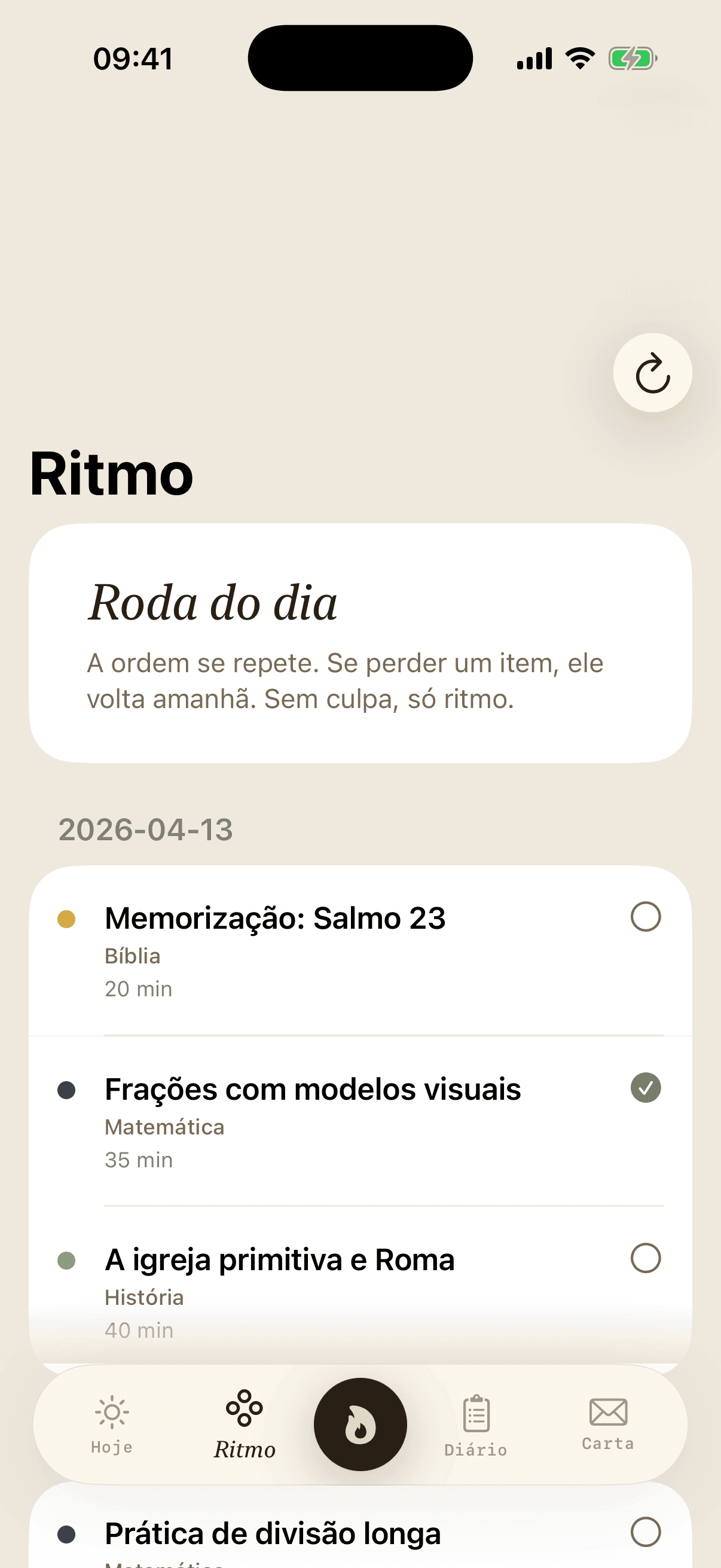
Put Scripture before the lesson list
Write the week before Monday. The first line of each school day is the same shape: a short Bible passage, one question a child can answer out loud, and a one-sentence prayer. Ten minutes is enough. If the passage is long, read part of it and leave the rest for the next day.
Do this before math, copywork or the book you are narrating. When the reading waits until "after the lessons," it is the first thing a full day drops. The daily devotional rhythm is the habit. This page is the week that habit sits inside. The family devotional routine is the same idea on the product page.
Keep five short blocks
After the reading, plan four academic blocks and one close. A block is one subject, one student, and a finish line you can say in a sentence: "page 12," "narrate the chapter," "copy the verse." Short blocks are easier to move when a day breaks.
A calm shape for one student:
1. Bible and prayer, before the other work. 2. Reading or narration from a book already in the house. 3. Math or the skill that needs a quiet stretch. 4. One other subject: science, history, copywork or nature. 5. A two-line close: what happened, and anything to carry to tomorrow.
A second student does not need a second full grid. Share the Bible reading. Stagger the quiet block so you are not teaching two new lessons at the same minute. The free weekly rhythm is a one-page version of this loop.
Write the record while the day is still small
The record is not the week. It is a few lines so Friday does not depend on memory. For each school day, keep the date, the student, the subjects you actually did, and one note. A note can be "narrated the chapter" or "stopped math early and finished it Thursday."
You do not need a photo of every page. One sample a week is plenty if the dated lines exist. Attendance and minutes can sit on the same line as the subject. That is enough to see whether the week matched the plan.
FaithSchool keeps the devotional, the lesson and the attendance note in one flow so you are not copying the day into a second notebook. Start free on the free plan and use the week before you look at paid capacity. Prices are on pricing. The app organizes what you log. It does not grade the spiritual life of the home.
Adjust on Friday, not in the middle of a hard morning
On Friday, look at the five days. Which block always ran long? Which one never happened? Move one thing, not the whole grid. If Bible reading only happened twice, shorten the passage rather than adding a second slot at night.
The sibling page Charlotte Mason week at home uses the same skeleton with living books, narration and short lessons. You can use either order. The point is that the week has a beginning, a few finish lines and a written close.
Open the free plan in FaithSchool
One active student, the daily devotional, weekly planning, and starter attendance and hours. No end date, and no credit card.
Keep reading
Put this article to work with planning, records and the family's daily rhythm.
View the guide library